
🧪 LSD Test Kits: Complete Educational Guide
Introduction
LSD test kits, often referred to as reagent testing kits, are tools used to help identify whether a substance may contain LSD (lysergic acid diethylamide) or other similar compounds.
These kits are widely discussed in harm-reduction communities because many substances sold as LSD may be misrepresented or contain unknown chemicals. Testing is therefore used as a safety measure to reduce potential health risks.
This guide explains how LSD testing works, its limitations, and important safety considerations.
🔬 What Is an LSD Test Kit?
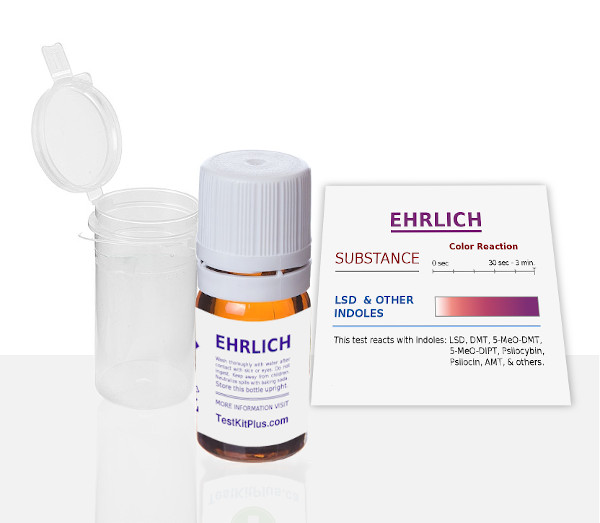
An LSD test kit is typically a set of chemical reagents designed to react with specific compounds. When a small sample is applied, the reagent changes color depending on the chemical composition.
These kits are not designed to confirm exact dosage or purity but to help identify the presence of certain substances or potential adulterants.
Common reagent types used in substance testing include:
- Ehrlich reagent (commonly associated with indole compounds)
- Hofmann reagent (used in psychedelic screening contexts)
- Marquis reagent (broad substance screening)
⚙️ How LSD Testing Works
Reagent testing works through a chemical reaction between the reagent solution and a small sample of the substance.
When applied:
- A tiny sample is placed on a testing surface
- A reagent is added
- A color change occurs
- The result is compared to a reference chart
Different colors may indicate the presence of different chemical groups, though interpretation is not always definitive.
⚠️ What LSD Test Kits Can and Cannot Do
✔️ They can:
- Indicate possible presence of LSD-like compounds
- Help identify some common adulterants
- Provide a basic chemical screening result
❌ They cannot:
- Guarantee purity or safety
- Measure dosage strength
- Detect every possible contaminant
- Replace laboratory testing
Because of these limitations, results should be interpreted cautiously.
🧠 Why Testing Is Used (Harm Reduction Context)
In harm-reduction communities, testing is encouraged because substances sold illegally may be misrepresented or contaminated.
Testing helps users:
- Reduce risk of unknowingly consuming harmful substances
- Make more informed safety decisions
- Identify potential chemical mismatches
However, it is important to understand that testing does not eliminate risk entirely.
🧪 Limitations of LSD Reagent Testing
While useful as a screening tool, LSD test kits have several limitations:
- Cannot confirm exact chemical identity with 100% accuracy
- May produce ambiguous or unclear color reactions
- Cannot detect all synthetic analogs or novel compounds
- Subject to human interpretation error
Because of these factors, laboratory analysis remains the only fully reliable method of identification.
⚖️ Legal Considerations
The legal status of reagent testing kits varies depending on the country. In many places, these kits are legal to own because they are considered chemical analysis tools, not drug paraphernalia.
However, laws differ widely, so users should always understand local regulations before obtaining or using any testing equipment.
🧯 Safety Considerations
If discussing substance testing in a harm-reduction context, important safety practices include:
- Always handle unknown substances cautiously
- Avoid ingestion of untested materials
- Use small samples only for testing purposes
- Follow safety instructions provided with reagents
- Store chemicals securely and away from children
📊 Importance of Drug Checking Services
In some regions, professional drug-checking services are available, offering more accurate laboratory-level analysis.
These services may provide:
- High-precision chemical identification
- Fentanyl or contaminant detection (where applicable)
- Public health harm-reduction support
❓ FAQ About LSD Test Kits
1. What is an LSD test kit used for?
It is used to chemically screen substances that may contain LSD or similar compounds.
2. Can LSD test kits confirm purity?
No, they only provide basic chemical reaction results and cannot confirm purity or dosage.
3. Are reagent test kits accurate?
They provide a general indication but are not 100% accurate or definitive.
4. Are LSD test kits legal?
In many countries, they are legal as chemical analysis tools, but laws vary by region.
5. Can test kits detect all substances?
No, they can only react to certain chemical groups and may miss novel compounds.
🧾 Conclusion
LSD test kits are part of broader harm-reduction efforts aimed at increasing safety awareness around unregulated substances. While they can provide useful preliminary information, they are not a guarantee of safety or purity.
Understanding their limitations is essential for responsible interpretation and safer decision-making.

Reviews
There are no reviews yet.